
The first time I sat down to read the Bible on my own, I did what most of us do. I opened to page one and started with Genesis.
Genesis was easy. Creation, Adam and Eve, Noah, Abraham, Joseph. I understood it because it was a story, and stories are simple to follow. But I didn’t really see a message in it yet. It felt more like a history lesson than proof of what God is capable of.
Then I kept going. Leviticus came. Then later Job. Whole chapters of laws and long speeches that I just wasn’t into, and I couldn’t tell if I was even getting it. Somewhere along the way I also found books I didn’t know existed. Amos? Haggai? Obadiah? Micah? Who are these people and why is nobody talking about them?
If that sounds like you, it usually just means nobody handed you a map. So here’s one: all 66 books in simple groups, an easy way to remember them, and a free Books of the Bible printable so you can start somewhere that makes sense.
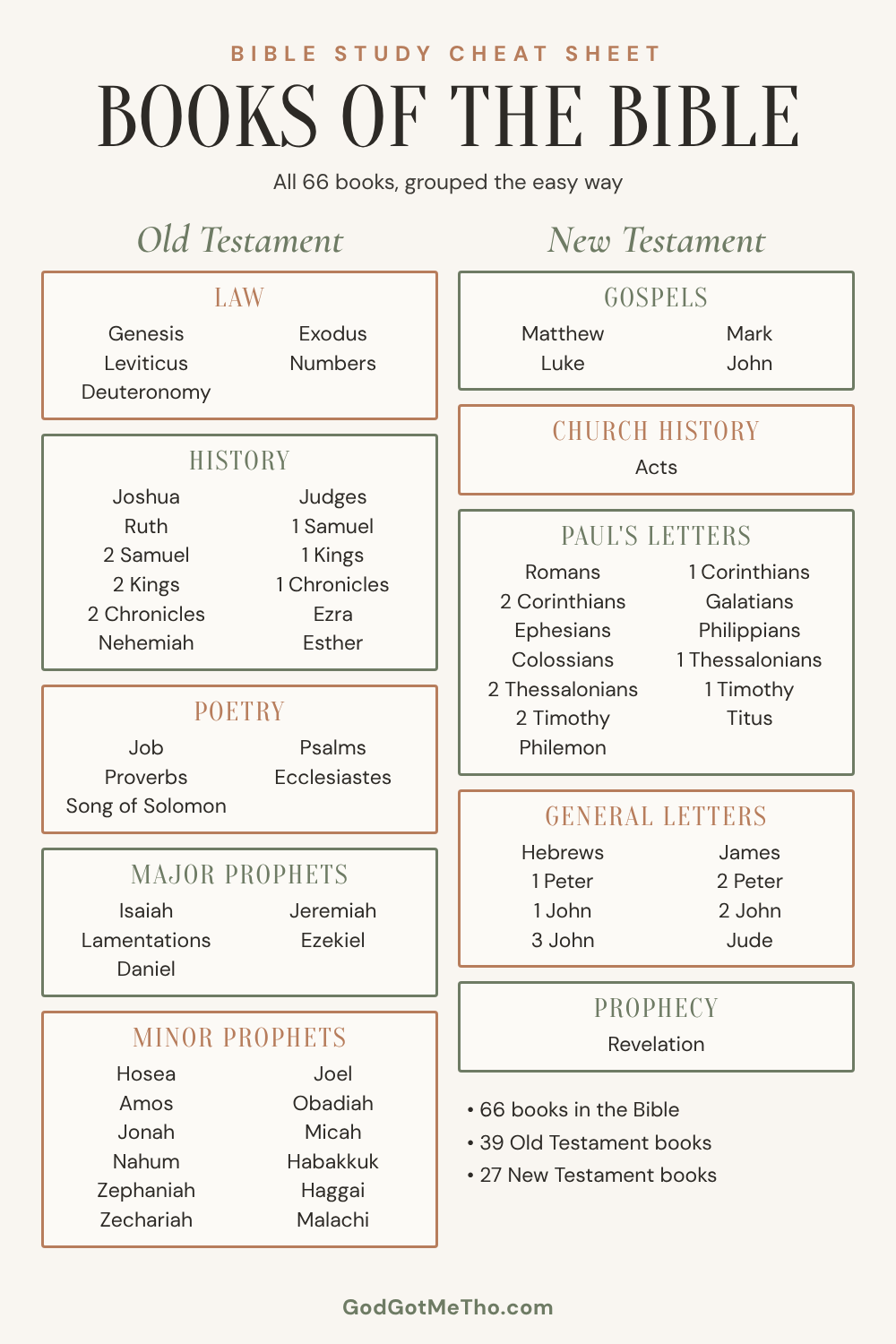
How many books are in the Bible?
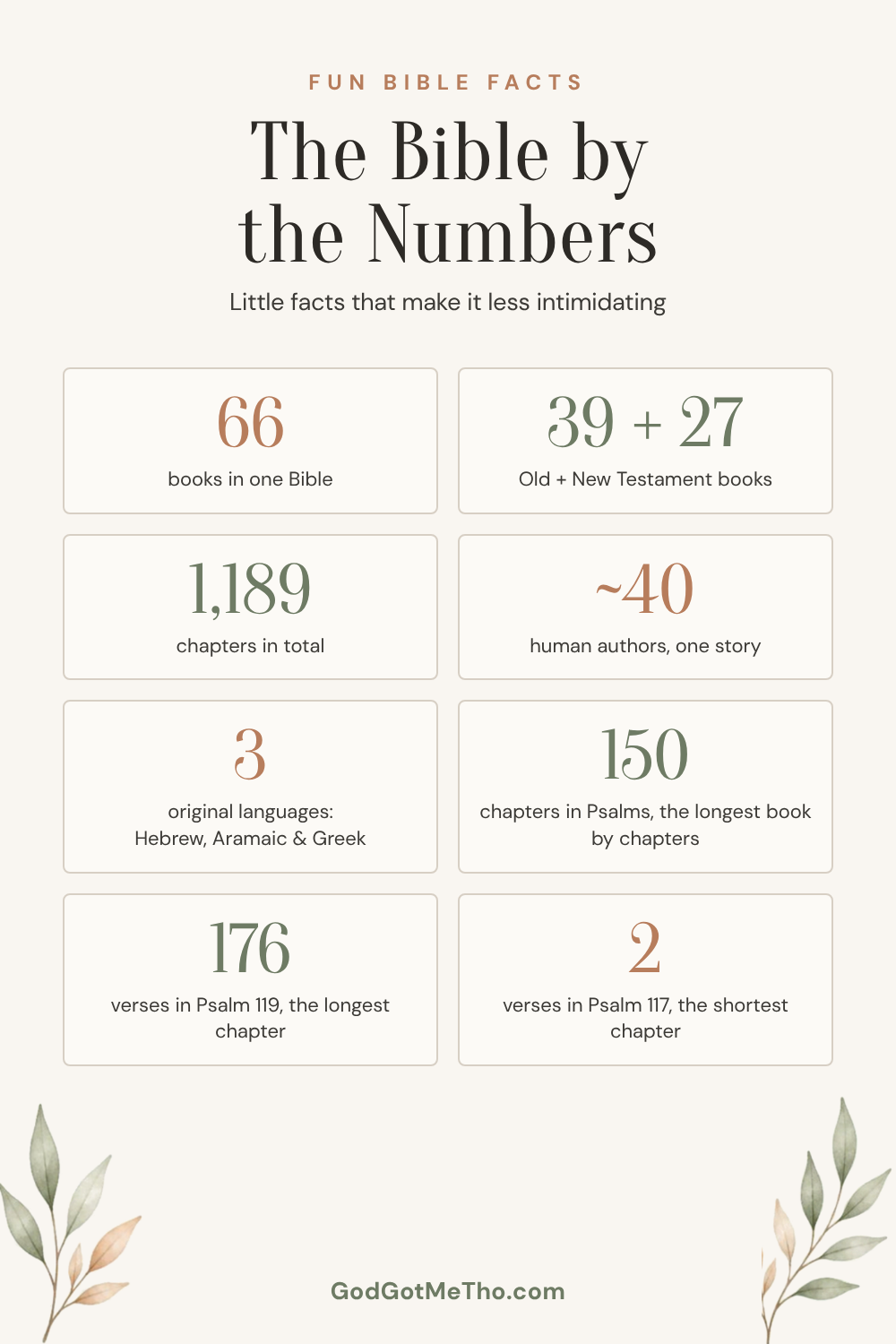
There are 66 books in the Bible: 39 in the Old Testament and 27 in the New Testament. They were written by about 40 people over roughly 1,500 years, in Hebrew, Aramaic and Greek. That’s a lot. No wonder it feels big when you open it cold.
Feel free to save or print the chart above. It’s the quickest way to see where every book sits.
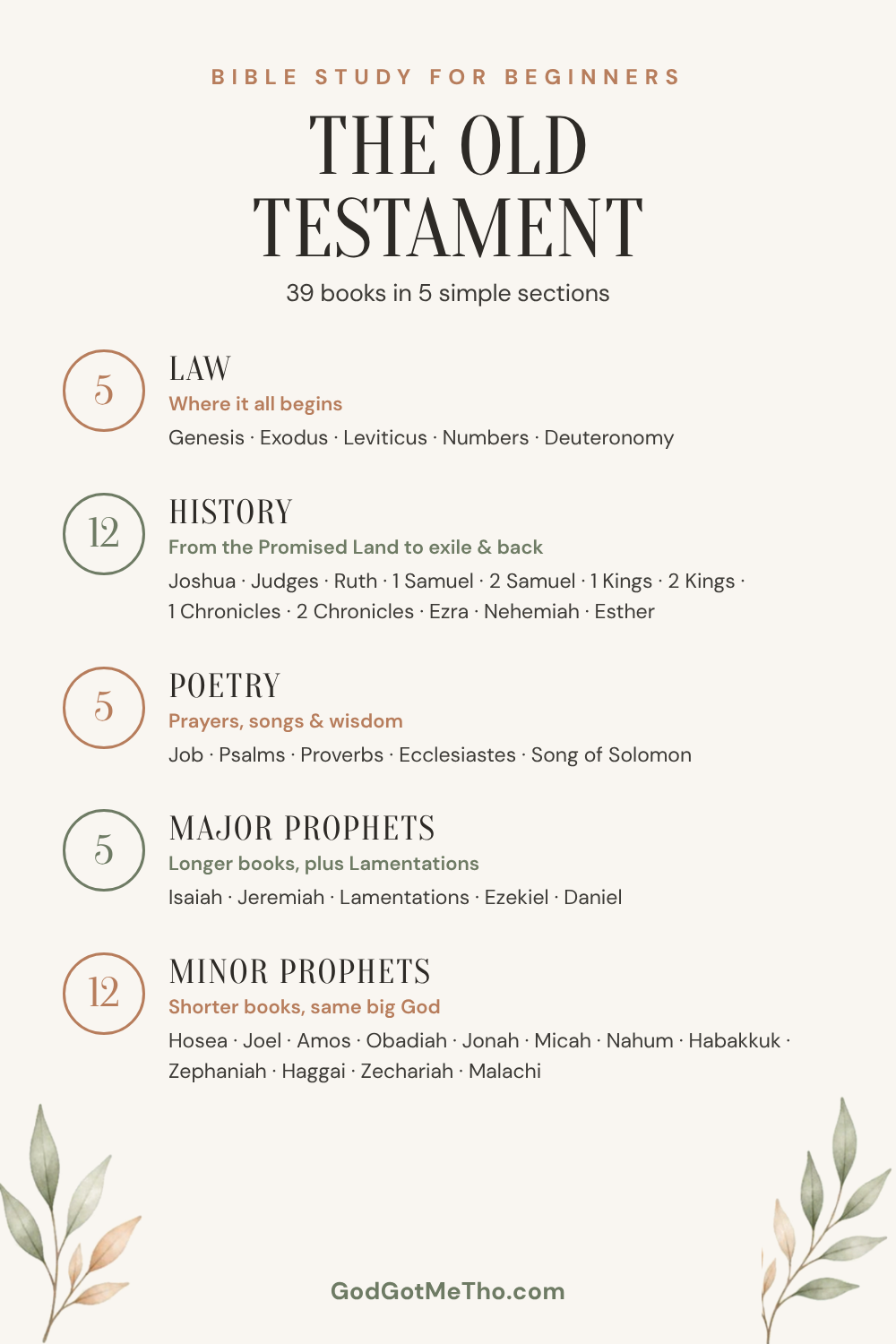
The Old Testament in 5 groups
Law (5 books): Genesis through Deuteronomy. Creation, God’s promise to Abraham, the escape from Egypt and the Ten Commandments. Leviticus lives here, so if it slows you down, I’ve been there.
History (12 books): Joshua through Esther. Israel enters the Promised Land, gets judges, then kings, then goes into exile and comes back.
Poetry (5 books): Job, Psalms, Proverbs, Ecclesiastes and Song of Solomon. Prayers, songs and wisdom. Psalms is the one I’d keep open on a hard day.
Major Prophets (5 books): Isaiah through Daniel. “Major” only means they’re longer.
Minor Prophets (12 books): Hosea through Malachi. This is where Amos, Obadiah, Micah and Haggai were hiding the whole time. They’re short, and every one of them calls God’s people back to Him.
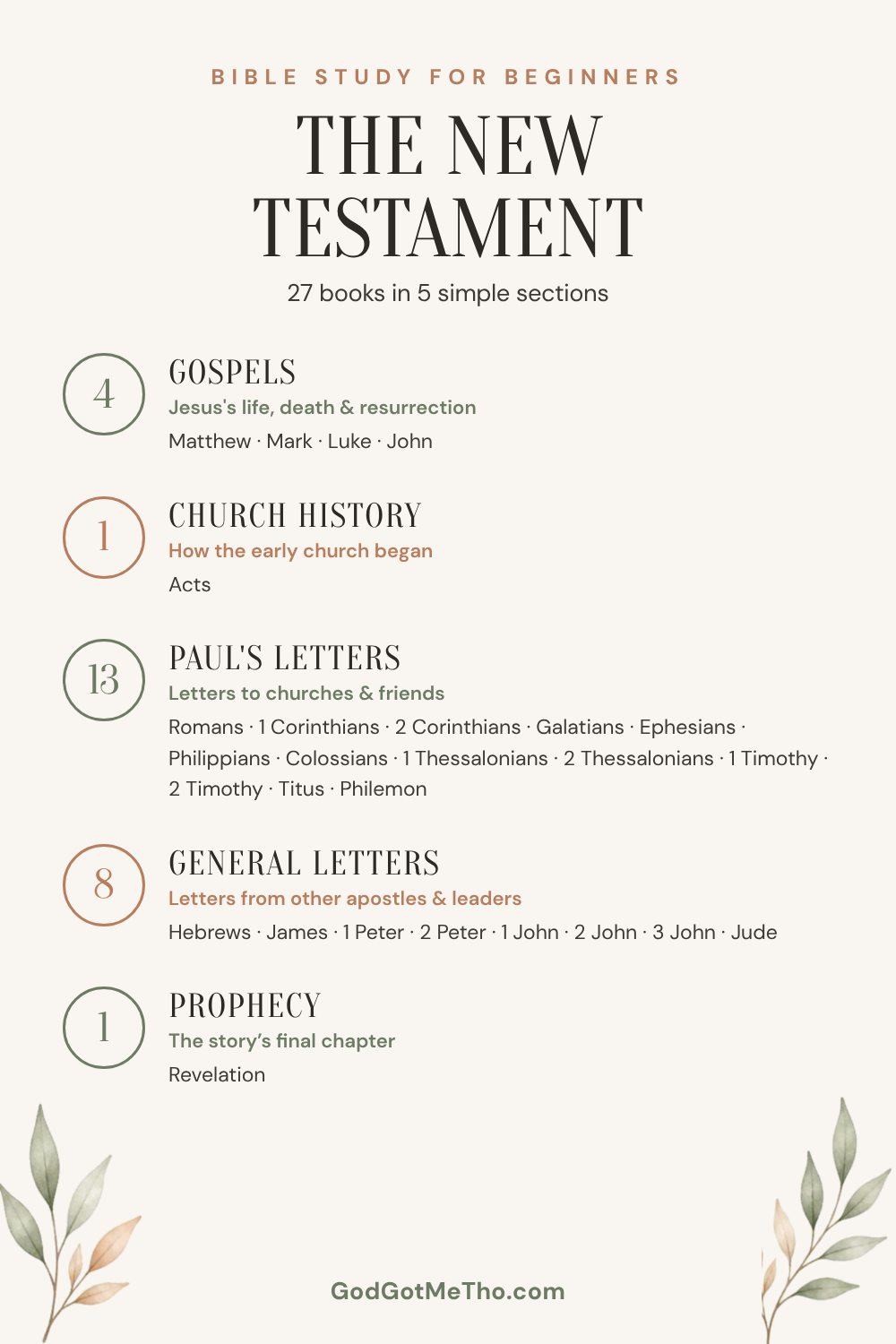
The New Testament in 5 groups
Church history (1 book): Acts, how the first believers spread the good news.
Gospels (4 books): Matthew, Mark, Luke and John, the life, death and resurrection of Jesus.
Paul’s letters (13 books): Romans through Philemon.
General letters (8 books): Hebrews through Jude, from other apostles and church leaders.
Prophecy (1 book): Revelation.
An easy trick to remember the books of the Bible
I never learned the books of the Bible as a kid. No Sunday school song, nothing. I’m still learning them now, and to be real with you, I’ll probably be learning them my whole life. That’s okay.
What helps me is learning the pattern before the names. The Old Testament goes 5, 12, 5, 5, 12 (Law, History, Poetry, Major Prophets, Minor Prophets). The New Testament goes 4, 1, 13, 8, 1 (Gospels, Acts, Paul’s letters, general letters, Revelation). Once the numbers stick, the names have somewhere to go.

Where to start: the Gospels
If a friend told me she wanted to read the Bible but didn’t know where to begin, I’d tell her to skip page one. Start with the Gospels, or anywhere in the New Testament.
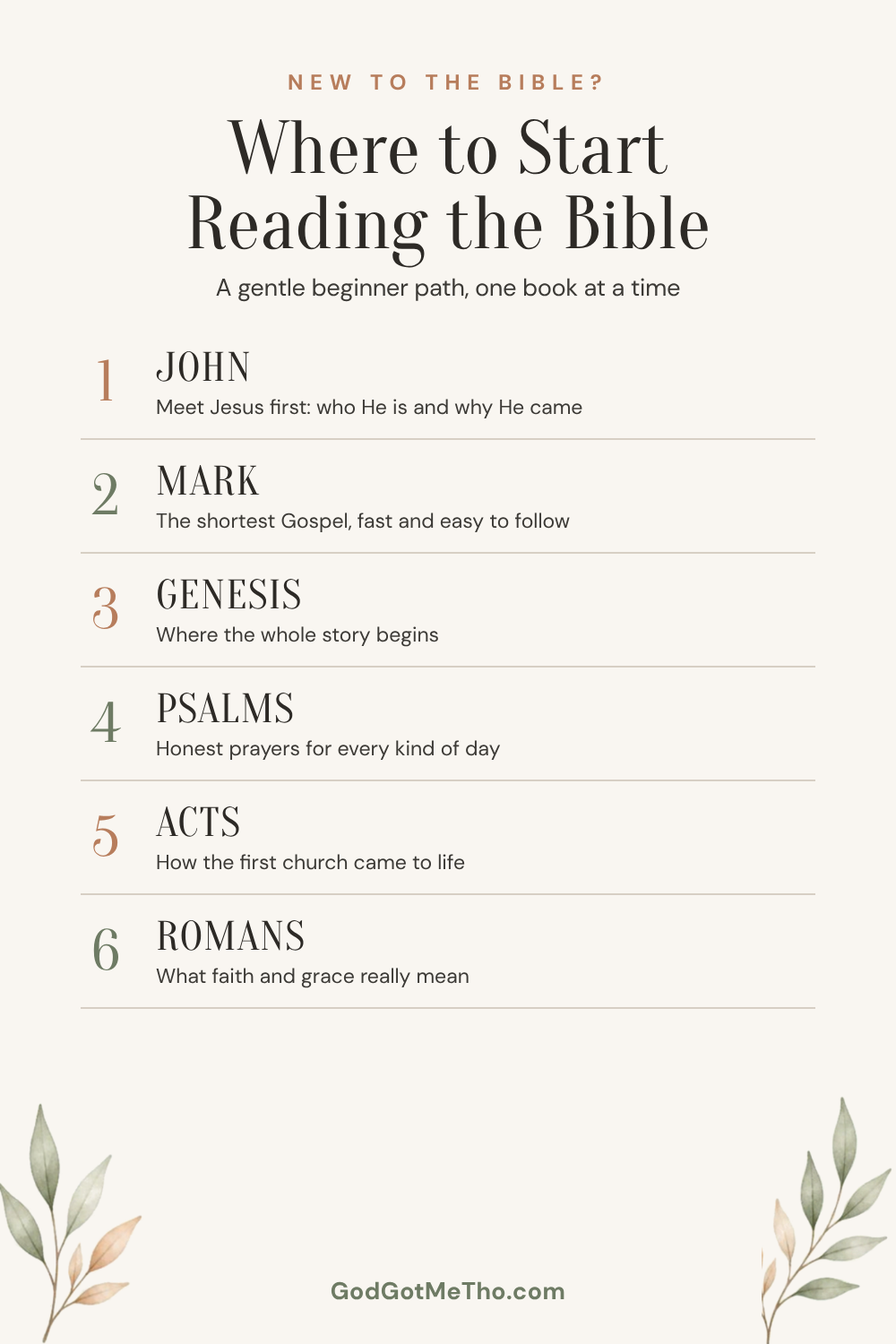
People ask me which Gospel is my favorite, and I don’t have one. Each Gospel tells the same story from a different angle, and I love all four because they point to the same thing: Jesus and His sacrifice. That’s what the whole Bible points to.
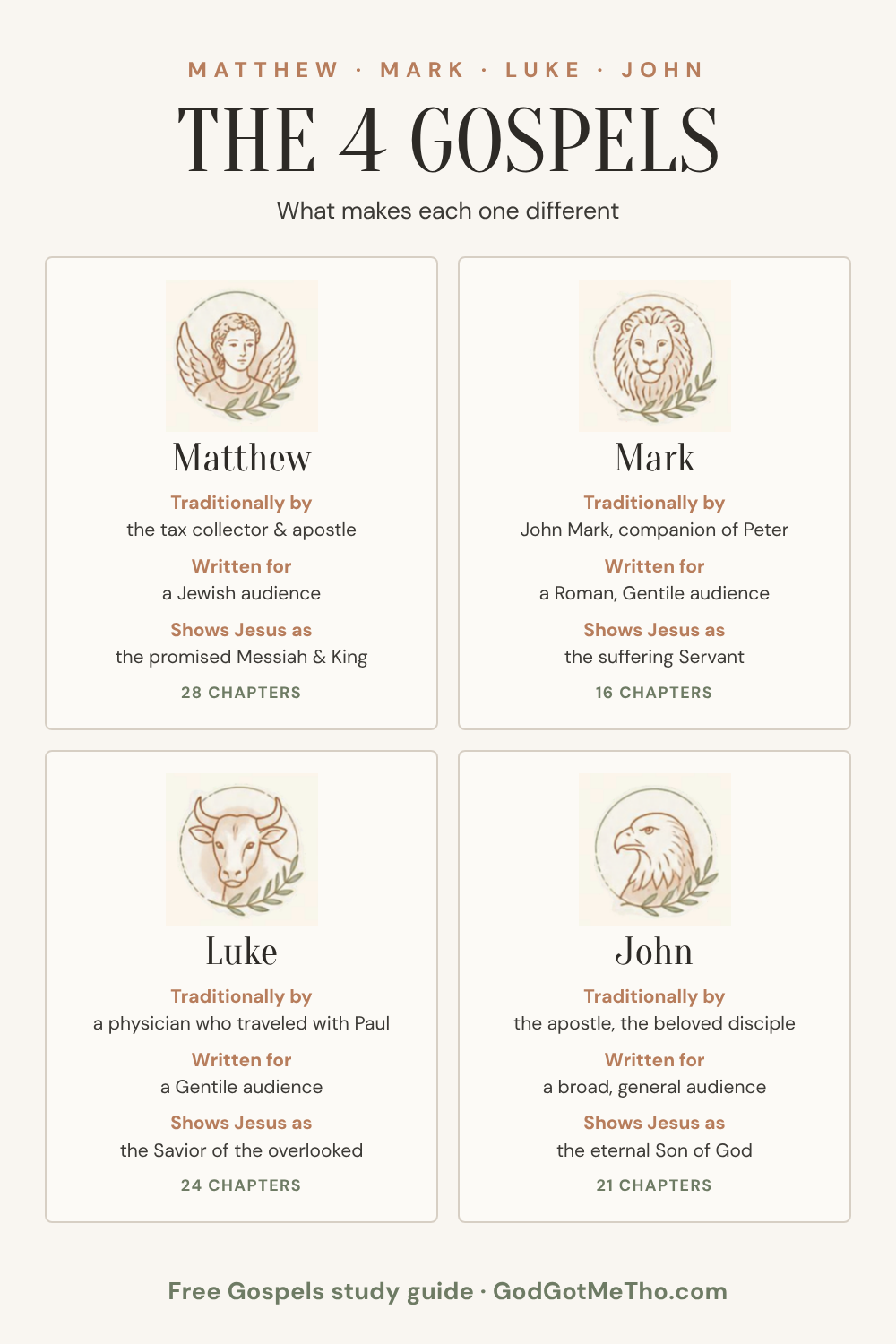
Still, it helps to know the angles before you read:
Matthew wrote for a Jewish audience and shows Jesus as the promised Messiah and King.
Mark is the shortest and fastest. He uses the word “immediately” more than 40 times.
Luke was a physician who paid close attention to people others overlooked. The Good Samaritan and the Prodigal Son appear only in his Gospel.
John has no parables at all. He builds his Gospel around seven signs and Jesus’s “I am” statements.
Your free Books of the Bible printable
This is the guide I wish I’d had when I was stuck somewhere between Leviticus and Job.
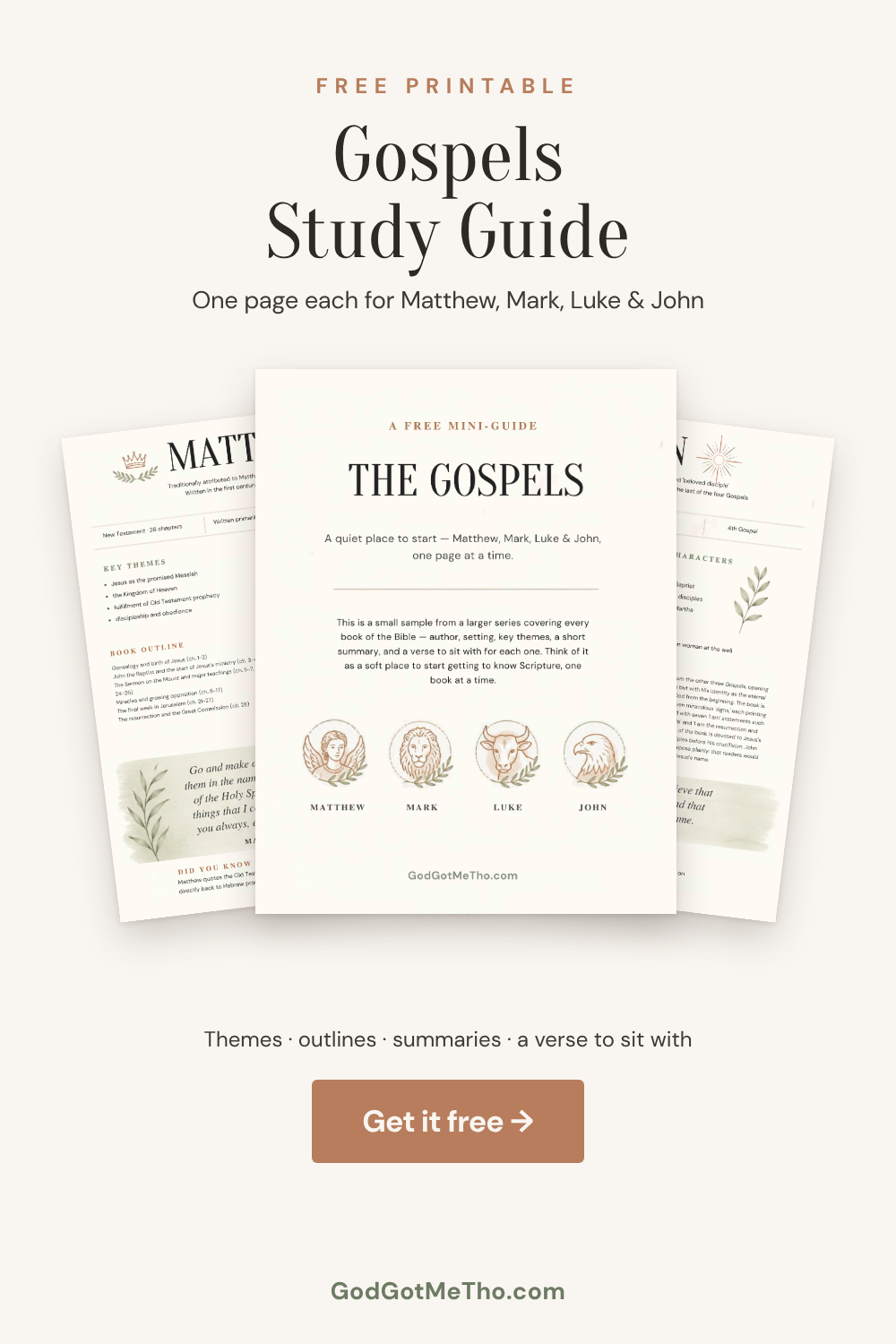
The free Gospels study guide gives you one page each for Matthew, Mark, Luke and John. Every page has the author and date, key themes, main characters, a chapter-by-chapter outline, a short summary, a verse to sit with and a “did you know” fact. You read the page first, and then the book makes sense when you open it.
I keep mine printed and laminated because paper feels tangible and cozy, and I like having it right next to my Bible. I also keep it on my iPad so I can look at it any time. Use whichever fits your quiet time.
Download the free Books of the Bible printable (Gospels study guide)
It’s free, and it lands in your inbox right away.
Want all 66 books in one place?
After the Gospels, you’ll probably want the same thing for every other book. I made that too.
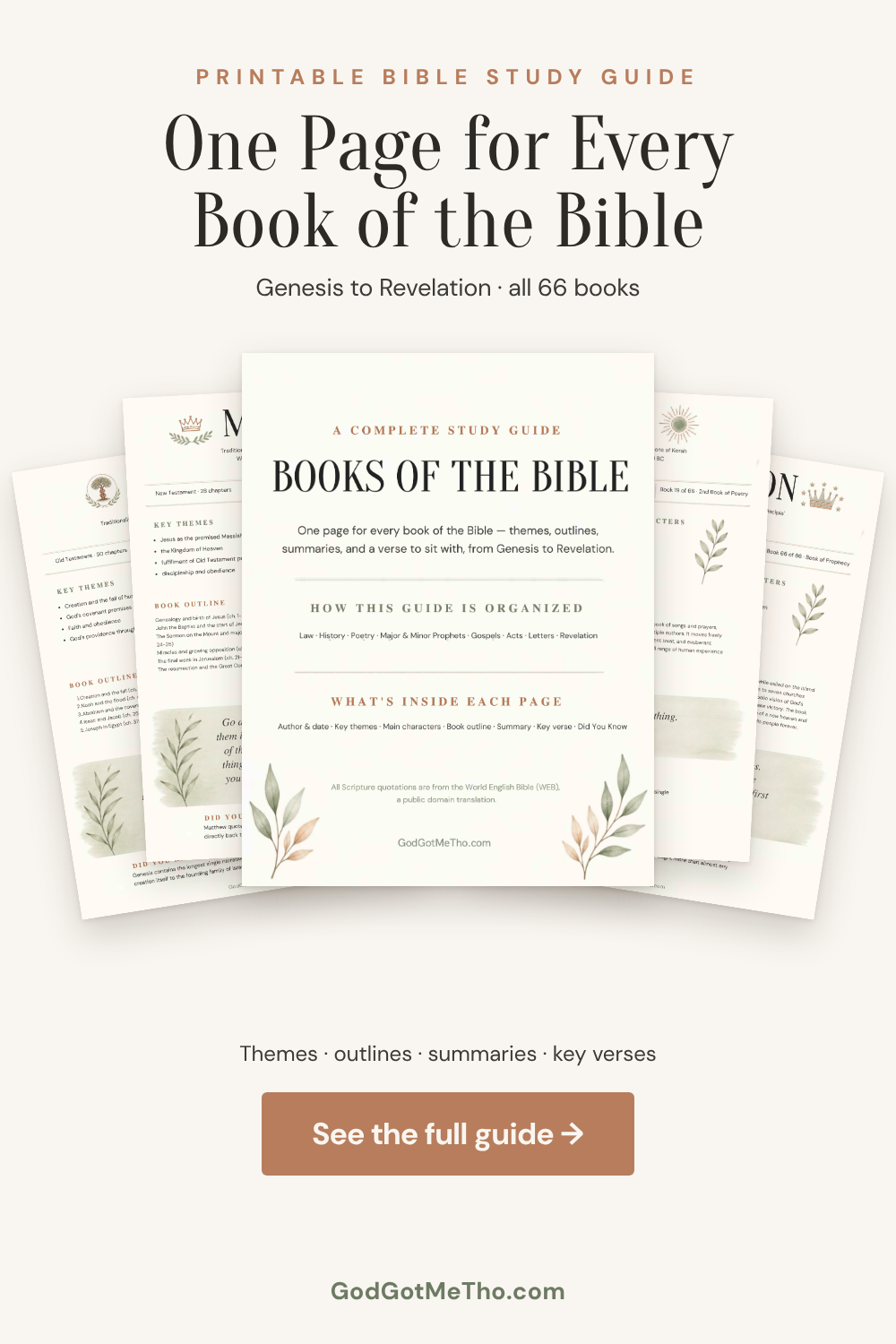
The Books of the Bible Study Guide has one page for every book, Genesis to Revelation, in the exact same format as the free guide. When you hit Amos or Haggai and have no idea what’s going on, you flip to that page and see the whole picture in a minute.
That’s the part I find so practical. You don’t have to search online, ask ChatGPT, or read an entire book just to understand what it’s about. The overview is right there in front of you on one page.
It’s an instant PDF you can print, laminate or keep on your tablet, and it’s $5 (regularly $8). That’s less than a coffee for a map of the whole Bible.

Start with one page
You don’t have to know all 66 books to start reading the Bible. I still don’t know them all by heart, and God hasn’t given up on me yet. Grab the free Gospels guide, pick one Gospel, and read its page before you begin. Then just read.
God’s got you, friend.
